

Houseplants that test your nerves, aka drama queens

Meet the DRAMA QUEENS
Spoiled, fragile, very sensitive (especially to criticism)… these are the houseplants that in Czech we would call the “proud princesses” of the plant world. You have to handle them with kid gloves, or you are in trouble, and those proud princesses can sulk stubbornly and for a long time. Maybe you have a little princess like that at home. All it takes is watering with water that has not been left to stand for exactly a week and a day, or leaving the window open a few seconds longer than usual, and lo and behold, Houston, we have a problem. What does caring for these highborn proud princesses look like, and which houseplants are most often among them?
The main symptoms of these dramatic beauties
So what do these houseplants have in common, apart from the title of proud princess? For example, they always look sick: they have yellow leaves, brown spots on the leaves, drooping leaves… the list is long. If a princess like this takes offense, she can sulk and refuse to grow for a very long time: she simply will not grow, and that is that. But their dramatic leaf dropping is what truly deserves an Oscar. And we must not forget that some of them attract not only growers, but also pests.
Options from re-education to reform
Every grower tries to help their green jungle thrive as well as possible. So at the first sign of symptoms, they conscientiously take action:
- They check the watering: “Am I watering too much/too little?” or “Did I use room-temperature water that has stood long enough?”
- They think about nutrients: “Could I have overfertilized it?” or, on the contrary, “Should I give it a little fertilizer?”
- They consider the circumstances: “Is it too cold/warm?” “Is there a draft from the window/door/hallway?” “Is it drying out next to the radiator?” Or they consider the light conditions: “Does it have enough light?”
- They are on the lookout for pests: “Could it have bugs, by any chance?”
So the grower weighs all the steps, checks the current situation, gives plant first aid, adjusts the conditions and waits for the houseplant to recover. Sometimes it takes a while, but after a month it should be clear whether the treatment worked. With proud princesses, however, another problem appears in the meantime, or the original one persists.
You can try to re-educate the houseplant: simply set up the most suitable conditions to the best of your knowledge and wait until it gets used to them. Some houseplants take longer to adapt, especially those that have been through various hardships (for example traveling from another country, a long stay in a store, and so on). You need to arm yourself with patience, try to keep the plant alive as best you can and hope, and that is usually enough.
But there are also, let’s say, hysterical ones that even re-education will not budge. They are simply offended, and nothing will change their attitude. You can have a plant like this at home for six months or a year and it still misbehaves and provokes you. You know how it is, sometimes there is simply nothing we can do. In such cases, it is worth considering a change, above all a change of owner. Try offering the plant to someone else; maybe it will do better with them. That does not mean you cannot get the same houseplant again as soon as you feel like it. Practice makes perfect, and maybe this time you will become friends more easily.
The most common “PROUD PRINCESSES”

Photo: The small-leaved, minimalist Sophora prostrata Little Baby
Sophora prostrata
This beautiful, minimalist plant with its delicate, even fragile look will delight anyone. But be on your guard. Sophora is one of those oversensitive beauties: if it does not like something, it simply drops its leaves. Fortunately, sophora is also quite resilient and tends to grow back. So once it gets used to you, or once you manage to remove the cause, the bare branches will leaf out again. Also watch out for unwanted admirers: scale insects, for which sophora is like a magnet. We have written more about sophora in our article.
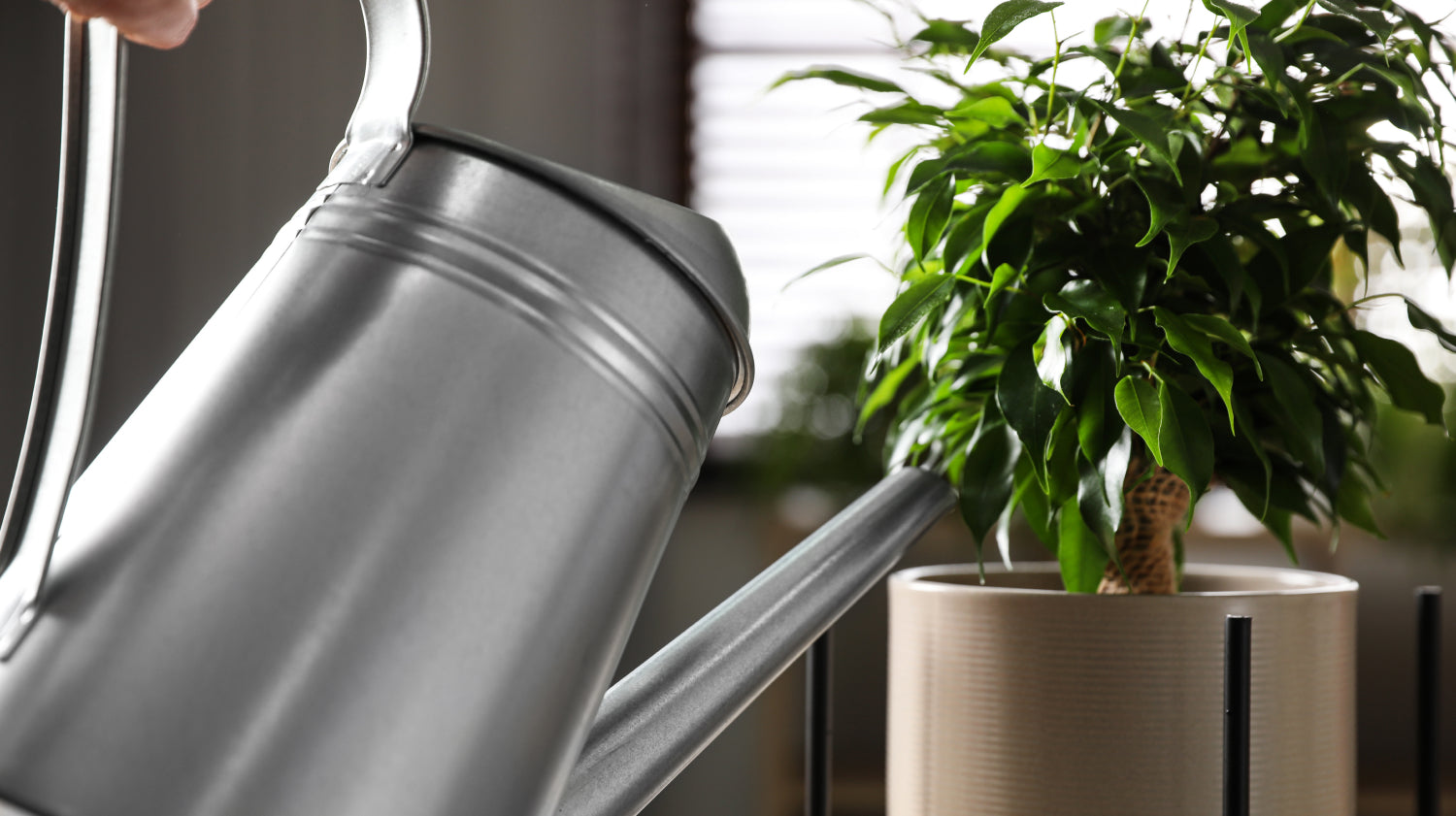
Photo: Ficus benjamina
Ficus benjamina
Oh, those weeping figs. Ficus plants with small leaves and dense crowns are very popular in homes. But watch out, they know it all too well and can give you a hard time. Ficus plants are very sensitive to temperature: as soon as cold air from the hallway, an open window or a door blows on them, the leaves are on the floor. Again, the leaves can grow back, but with this plant it is easier to prevent leaf drop in the first place. After all, they look best as dense little trees. You can learn more in general about ficus plants and their ailments in our article.

Photo: The houseplant fern Nephrolepis
Nephrolepis, or Boston fern
This is probably the best-known type of fern found in homes. Its long fronds with small leaflets decorate many a bathroom. And that brings us to the stumbling block: humidity. Ferns generally thrive in a humid environment, which is why they are very happy in bathrooms and a real joy to have. Somewhere near a radiator, you would quickly find out how annoying it is to clean up the leaves this plant drops. At the same time, it also needs some light; it would not be very happy in the dark or in the shade either.

Photo: Tradescantia Quadricolor
Tradescantia, or spiderwort
Spiderworts, inch plants or Tradescantia often appear on lists for beginner growers. It is true that they are fairly low-maintenance, fast-growing bundles of green joy. But as their Czech name voděnka (from voda, water) suggests, you need to be careful with water. Spiderworts grow like weeds, and while they do, they need plenty of water. But we must not forget that they are no longer so thirsty, especially in winter. Spiderworts often signal a lack or an excess of water by browning leaves. They can also give us trouble with unsightly leggy stems that stretch toward the sun from a spot that is too shady. So think about the right watering routine and plenty of sun, and your Tradescantia will thank you.

Photo: Maranta Fascinator
Calathea, or prayer plants in general
We love prayer plants above all for their ornamental, multicolored and patterned leaves. They also fascinate us with their daily routine, in which their leaves go to sleep at night. When getting prayer plants, however, keep in mind that they are tropical plants through and through. This means that without enough humidity, warmth and light, they will not bring you much joy. The most common ailment is drying leaf tips, which really spoil their looks. If your plant is not near a source of dry heat (such as a radiator), your watering is right, it has enough light and the leaves still dry out, the last option is to get a humidifier. Misting really will not save you here. But if you are not a total perfectionist and can overlook a dry spot here and there, you can get along well with prayer plants this way too. We write more about prayer plants in our article.

Photo:
Alocasias
Another group of proud princesses are alocasias. Their majestic, large and tall leaves in various colors and patterns tempt many a grower. But we have alocasias figured out by now, and most growers know they are plants for the more experienced. Again, these are tropical beauties that are sensitive to watering and humidity as well as to warmth and sun. They also usually keep a careful eye on the number of their leaves and do not like to increase it, so they often trade an old leaf for a new one. That can make some inexperienced growers nervous. With alocasias, it is important to water thoroughly, as they need to feel the “humidity” of their tropical home, but if their soil is already wet, they rot and dramatically curl and drop their leaves. Enough light and warmth is also important for their comfort. We have written more about caring for alocasias in our article.

Photo: Variegated Syngonium Albo Variegata "Imperial White"
Variegated plants
Of course, we saved the biggest drama queens for last. And they are none other than variegated houseplants. They are capable of anything. For example: the variegated parts like to dry out, and there is no need to panic, because it is natural, especially for the white parts. They also like to commit suicide by putting out only variegated growth until they have nothing left to live on, and then they die. In that case, it is a good idea to cut them back. But variegated plants sometimes even revert, and that is the high point of their dramatic career. They simply start growing plain green instead of variegated, full stop. Then radical cutting back cannot be avoided either. In general, though, variegated plants (usually depending on the extent of their variegation) are more prone to overwatering, to drying out in lower humidity and to slower growth. We have written more about variegated plants for you in our article. You can read more about variegated plants and their care in our article.
In conclusion
Drama queens can give us a hard time, some so much that we start to question whether our growing career makes sense. But it would not be the same without challenges and mishaps, and maybe that makes us appreciate the ordinary classics and staples even more, the ones that give our green jungle stability and an oasis of calm and comfort.
So if you want to avoid meeting a proud plant princess, read up on the information available about different plant species, for example right here on our blog, and you will not be caught off guard.
Mgr. Jana Beránková