

The most common houseplant pests

Uninvited guests: everything you need to know about pests
A houseplant grower’s worst nightmare is a sad-looking plant. Limp leaves drooping toward the ground, blotchy or yellowing spots on the leaves: simply a disaster. The first thing that crosses our minds is: “It must be overwatered.” But that is not always the case. In this article, we will give you some basic information about houseplant pests, how to recognize them and also how to deal with them, so you can save your houseplants from ruin.
The most common pest control methods
There are several kinds of pests, and each of them requires a slightly different method of control. In general, though, there is a kind of first-aid routine used in pest control. It consists of:
- Thoroughly washing the plant with soapy water
- Using a spray or parasitic nematodes designed for the specific pest
You can almost always use a really thorough and careful wash of all parts of the plant (including the leaves and stems) with soap and water, whatever the type of pest. It is a fairly simple yet effective way to get rid of pests if there are not many of them on the plant yet. We could call this procedure plant first aid, and in most cases it really works.
Some pests, however, are persistent and tough, and not even soap and water will scare them off. For those, it pays to reach for a chemical product, most often in the form of a spray. There are lots of them on the market: many different brands and types for all kinds of pests. So it really pays to be able to recognize and correctly identify the pest.
It is a good idea to repeat both methods at weekly intervals until we are sure we have successfully killed the pests.
It is also important to mention that the sooner we discover pests, the more likely we are to save our plant treasures from ruin. The well-known saying also applies here: forewarned is forearmed. Timely and regular prevention also helps in the fight against pests.
Prevention: the key to success
Pests most often multiply in winter or summer. In winter, they like the dry air from heating in our homes, and in summer, they multiply because we open the windows more often. Of course, this is not a rule, and you can come across pests almost any time, so prevention really pays off. How do you go about it? Here are a few tips.
1. Inspection: if you choose a new plant in person, it is a good idea to look it over carefully for signs of a pest infestation. We always try to choose nice, healthy-looking plants with nice, healthy roots.
2. Quarantine: have you bought or been given a new houseplant? Congratulations, but wait a while before introducing it to the other members of your jungle. You never know what is hiding in the soil or on the plant, because some pests may not be visible at first glance. That is why it is recommended to set up a quarantine system for at least a week, ideally for fourteen days. Keep new houseplants, or any that you suspect might be infested, away from your other plants. Ideally, set aside a spare room for quarantine, so that the “infectious” plants cannot infect the healthy ones and yet do not suffer too much. After all, these houseplants still need the care they are used to, along with sunshine and watering.
No room for quarantine? No problem, we know a trick.
Bagging: if you do not have a spare room for quarantine, bagging can help. First, thoroughly treat the infested houseplant using methods you like or that have worked for you, and then seal it in an airtight bag. Large bags with an airtight seal work great for this. This trick not only isolates the plant but also creates a kind of greenhouse that holds in moisture, which most pests do not like much. Check the bagged plant regularly and always let some fresh air in for a while.
1. Regular hygiene: during the pandemic, we saw reminders everywhere to wash our hands more often. Prevention for houseplants calls for exactly the same thing. Frequently wiping dust off the leaves, or showering the plants with water that is not too cold and in a stream that is not too strong, keeps plants and their natural protective barriers in good shape. Pests rarely do well on plants cared for like this.
2. Checks: is it time for a big watering session, or are you just admiring your green jungle? These are exactly the moments made for checking your houseplants. Take a good look at both sides of the leaves to see whether anything looks suspicious. Acting early really saves you stress, saves your houseplant and maybe even saves you money on treatments.
Now that we have covered how to prevent pest infestations in general and how to give first aid at the first signs of an unwelcome invasion, it is worth briefly introducing the most common houseplant pests we may come across. So how do we recognize them, and how can we outsmart them?

Photo: Fungus gnats caught on a sticky trap next to a plant
Fungus gnats
Almost everyone has come across these black, rather annoying little flies. We can call fungus gnats the most common houseplant pests, and when they multiply, they become a problem for the growers themselves too: nobody likes a room full of flies. We usually bring fungus gnats home in potting mix, where their larvae feed on organic matter but, unfortunately, also on plant roots. The houseplants then look sad and may dry out and wilt.
You can beat fungus gnats either by introducing a “dry season,” when you let the potting mix of all the infested plants dry out thoroughly, or by sending parasitic nematodes into battle. You can also effectively catch the adult flies with yellow sticky traps. You can read more about fungus gnats and tips on how to deal with them in our article here.

Photo: Spider mites spinning webs around a plant
Spider mites
Spider mites are one of the toughest kinds of pests. They multiply quickly and can therefore do considerable damage to their plant victims. These tiny mites grow to about half a millimeter long, so they are often invisible to the naked eye. The most common species are white, but there are also red-orange to black ones. They love warm, dry conditions, which is why they most often appear in winter or summer.
Spider mites cluster on the plant’s leaves and gradually suck them dry. These critters leave tiny air bubbles in the tissue they suck, which can give the infested leaves a silvery tinge. A common telltale sign, besides the plant’s rapid decline (white, yellow or black spots on the leaves), is the fine but dense webbing that spider mites leave behind.
Does your houseplant look sick, with wilted and spotty leaves? Can you see fine webs around the leaves or by the stems, and what look like moving colored dots? Then you are dealing with spider mites. Watch out: they most often hide on the undersides of the leaves.
Since spider mites multiply really fast and do a lot of damage, you need to be faster. Wash the affected parts of the plant and get rid of the visible adults (the moving dots), and in this case we recommend going straight to a chemical counterattack (even as a preventive measure). Suitable products include Vertimec or Substral Careo concentrate. You can also call in predatory mites, Typhlodromus pyri (T-PYRI), to help fight spider mites; they are among the most effective fighters against mites. In nature, ladybugs or small wasps, for example, keep spider mites in check. When using predatory mites or a store-bought spray, follow the enclosed instructions for correct application.

Photo: Thrips with their young, mostly on the underside of the leaf or in the leaf axils
Thrips
Another sap-sucking insect that can really torment your indoor jungle is thrips. They are tiny, slender bugs, dark brown to black in color, which may grow wings as adults. Not only do they damage plants by sucking their sap, they are also dangerous carriers of viruses that can kill plants as well. Thrips mainly attack new shoots and young leaves or flowers, which causes deformed growth. Unlike mites, these critters give themselves away by the droppings they leave behind on the leaves (tiny black spots and drops).
You can get rid of thrips with early first aid and follow-up care. For better results, you can also use blue sticky traps: the same traps in yellow are used against fungus gnats, but it is the color blue that attracts thrips. As with spider mites, you can bring in reinforcements in the form of T-PYRI predatory mites or reach for products designed to kill thrips.

Photo: Mealybugs on the underside of a leaf
Mealybugs
Mealybugs are another kind of insect that feasts on plant sap. They are white, oval, fuzzy bugs. Mealybugs are very hardy pests because their bodies are covered with a shield of wax that they produce themselves. Mealybugs are most often found in the leaf axils, in hard-to-reach places such as the folds of leaves, or even on the roots underground. So it is not easy to spot them right away. Orchids, succulents and Hoyas are among their most frequent victims. They attach themselves to the leaves or stems of plants and suck out the plant sap. Mealybugs also belong to a notable group of pests, partly because some of its members are used to obtain dyes for cosmetics and the textile industry.
You can recognize mealybugs on plants by the plant’s decline or by the honeydew they leave behind, which is a sticky liquid. Much more often, however, you will notice white, cotton-like clusters on the plant, which mealybugs also create.
If you notice white mealybug larvae that do not yet have a fully developed wax shield, you can use the good old soap and water method and ordinary sprays on these critters. But if the mealybugs have managed to hide and grow up, their shield will probably protect them from these methods. However, we have another trick up our sleeve that mealybugs will not easily shake off: alcohol.
An effective way to get rid of mealybugs without a special spray is alcohol, either on its own or mixed with water. You can apply the liquid to the infested parts of the plant either with cotton swabs or with an ordinary brush. On contact with alcohol, mealybugs simply dissolve. Using cotton swabs or a brush also ensures that the alcohol reaches all the places that sprays, for example, may not reach, so the mealybugs cannot escape. Substral Careo spray is also effective at killing mealybugs.
“I first came across mealybugs in my college dorm, where I had innocently brought my favorite Hoya Eskimo. I found a white, hairy bug on it and panicked because I didn’t have any products with me. I found tips online about alcohol, used the vodka my roommate had in the fridge, and on contact with it the white pest simply dissolved. It really surprised me how easy it was. Luckily, I didn’t find any more mealybugs on the Hoya, and the plant is in excellent health!”
Once you find out that your houseplant is infested with mealybugs and have given it suitable treatment, put repotting on your list too, as soon as possible. As we wrote earlier, mealybugs can hide in the soil and damage the roots undetected for some time. Repotting and inspecting the roots will then help you avoid an unpleasant surprise and a “return from the dead.”
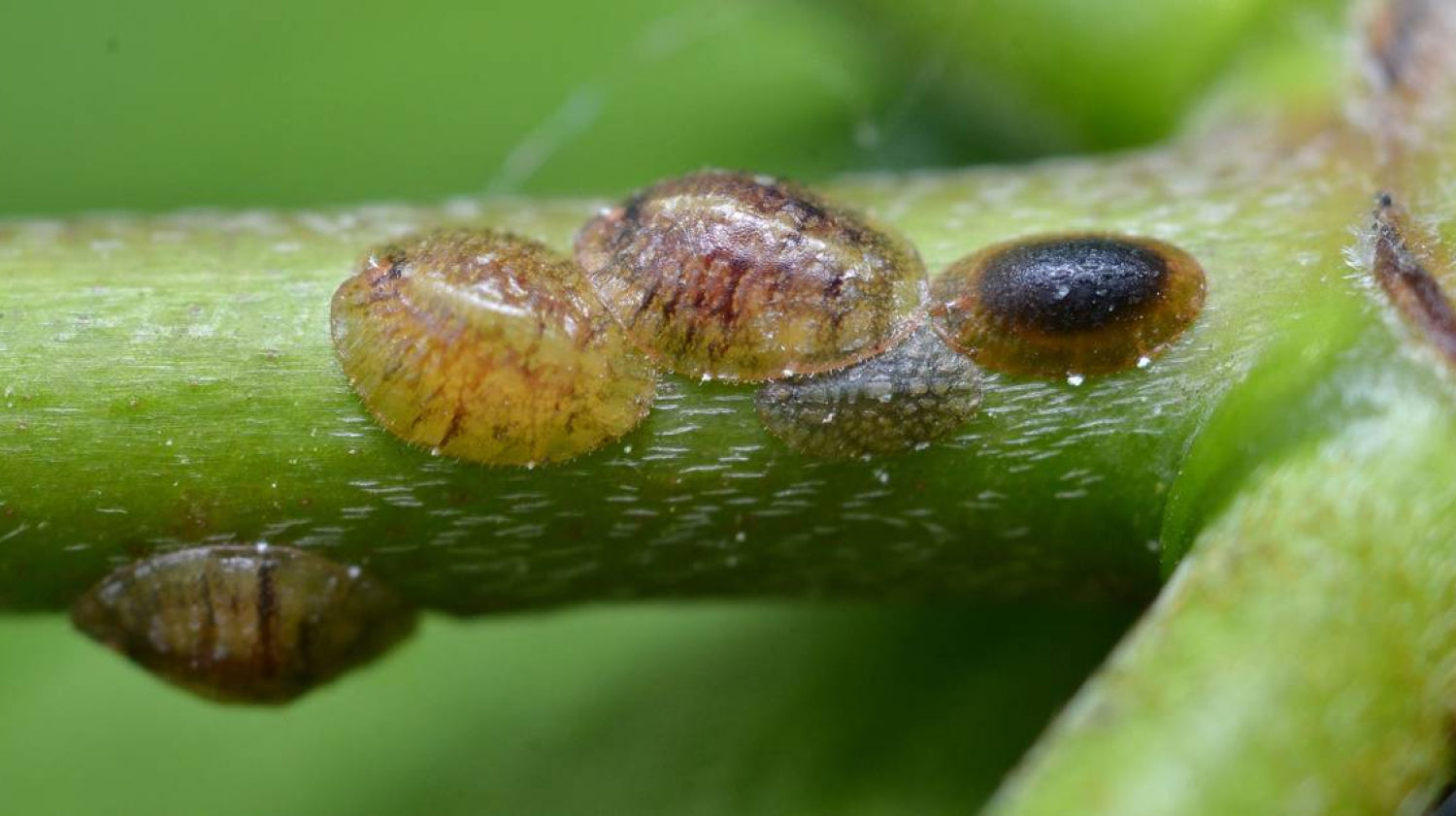
Photo: Scale insects attached to a plant stem
Scale insects
We saved the toughest plant villain for last. Scale insects: the terror of every houseplant. They are insects from the same order as mealybugs; they also attach themselves to the plant and are protected by a shield that covers their whole body. On houseplants, they show up as raised, round spots firmly stuck to stems and leaves. Like mealybugs, they produce honeydew, which among other things makes it easier for various diseases to spread. Unlike the other pests mentioned, scale insects love both warmth and humidity, so they also occur in greenhouses.
Scale insects differ from mealybugs in that they do not move freely around the plant but stay stuck in place. They are firmly attached and protected by their armor, which shields them from various sprays. As with mealybugs, the first thing you may notice is a declining houseplant. You may also see deformed growth on the plant, or the scale insects themselves. These armored pests are especially keen on woody plants, and their favorite victim is Sophora prostrata, but in the end, there is hardly a plant they will turn down.
You can try to get rid of scale insects by physically removing the attached adults, for example with tweezers. If the infested area is much larger and this painstaking work is out of the question, it is a good idea to reach for contact products designed for scale insects (for example, Fast M, Mospilan or Rock Effect concentrate). In the wild, the natural enemies of scale insects are predatory species of ladybugs or small wasps, and in winter, titmice may also feed on them. If all else fails, you can also try the alcohol method that works on mealybugs, or Substral Careo concentrate in a spray bottle.
Stay alert
None of us wants to meet pests in person, but every now and then, uninvited guests can simply show up. It is best to accept this and therefore try to conscientiously follow preventive measures and regularly check your plants (especially in winter and as soon as it starts to get warm outside again). If things do not go your way and the pest wins the battle for your houseplant, keep in mind that you are neither the first nor the last to lose a part of your jungle to pests. And if you win, above all enjoy your sweet victory and maybe treat yourself to a new houseplant.
In the next installment, we will look at aphids, whiteflies, armored scale, springtails and more...
Author: Jana Beránková