

Aglaonema, a rewarding houseplant for beginners

The genus Aglaonema includes more than 50 plant species, which are also known as Chinese evergreens. It is a popular houseplant with attractive leaves and the ability to survive even in lower light. Aglaonemas originally come from the tropical regions of Southeast Asia, specifically Malaysia and the Philippines, where they are among the most popular houseplants. These plants are loved for their decorative look and their ability to clean the air of harmful substances.
One of the main reasons people choose Aglaonemas is their ability to survive in lower light. This plant can thrive even in rooms with little direct light, which makes it ideal for apartments and offices with limited access to natural light. To grow well, Aglaonemas only need a bright to partially shaded spot; direct sunlight could damage their leaves.
Another advantage of Aglaonemas is their ability to clean the air. This plant is known for its filtering properties, which help remove harmful substances from the air. Aglaonemas can absorb substances such as formaldehyde, benzene and carbon dioxide, which can help create a healthier and cleaner indoor environment.
A good choice for beginners
Aglaonemas are very low-maintenance houseplants, which makes them suitable for complete beginners who do not want to spend much time on their plants. A big advantage is that Aglaonemas are also very hardy plants with tough leaves that can hold water for a little longer. So if you occasionally forget to water them, they will probably not die, and if you overwater them, they will most likely be fine as well. You can place them almost anywhere in your home, except in direct sunlight or in complete darkness.
Aglaonemas belong to the aroid group of plants, which also includes monsteras, philodendrons, syngoniums and others. That means they are toxic, but not so much that you need to worry about having them at home with pets or small children.

Photo: Aglaonema Lemon Mint 'Key Lime'
A less common species
Aglaonemas are not as widespread as some other plants. The genus has a little over 50 species, and in most cases they are medium-sized plants without large leaves like those of monsteras, for example. This makes them suitable for ordinary apartments, and they do not need much space. One drawback of these plants tends to be their higher price, even for small plants, because they are slow-growing houseplants.
The best-known species in our part of the world include Aglaonema Maria and Aglaonema Cutlass. Among the many varieties on offer, you will also find more colorful plants with interesting leaf coloring, such as Aglaonema Electric Lime or Aglaonema Lemon Mint and many varieties in shades from pink to deep red, such as Aglaonema Red Zircon.
How to care for Aglaonemas
Aglaonemas are very resilient: they tolerate both warm and cooler rooms, overwatering as well as drought, and they are not fussy about humidity or light conditions. Let’s look at the ideal conditions for these plants so they grow beautifully in your home.

What environment suits them, and how much light do they need?
Aglaonemas prefer temperatures between 20 and 25 °C (68 to 77 °F) during the day. They are sensitive to icy drafts and sudden changes in temperature, so it is important to keep the temperature around them stable. Avoid placing Aglaonemas near cold windows or doors in the winter months or close to air conditioners. Icy air can completely destroy the leaves. Be especially careful when buying these plants in the winter months and check the condition of the plant: if it has visible brown spots on the leaf edges or yellowed leaves, it has probably been exposed to frost and its leaves are rotting.
So an Aglaonema will love a brighter spot without direct sun, especially the more colorful varieties with variegation or pink shades. The dark green varieties are happier with partial shade. It will appreciate a more humid environment, but it is also fine with a normal indoor climate.
Watering and fertilizing
Aglaonemas do not need a lot of nutrients in the soil, so they will be happy with any ordinary fertilizer for foliage plants, which will support their growth. Because Aglaonemas flower quite easily even in our homes, producing inconspicuous inflorescences, usually in spring but sometimes in fall as well, give them fertilizers with a higher nitrogen content rather than fertilizers that promote flowering. With these plants, the flowers are not the main thing we admire, and they take energy from the plant.
Normally, watering once a week is enough, but if you water more generously, the plant will also be fine with watering every 14 days. When watering an Aglaonema, try to keep the soil evenly moist, but avoid excess water, which could lead to root rot. In the warm months, watch out for the soil drying out too quickly. It is also one of the easiest plants to switch to hydroponics, thanks to its roots, which are very easy to clean of the remaining potting mix, and it thrives in hydroponics.
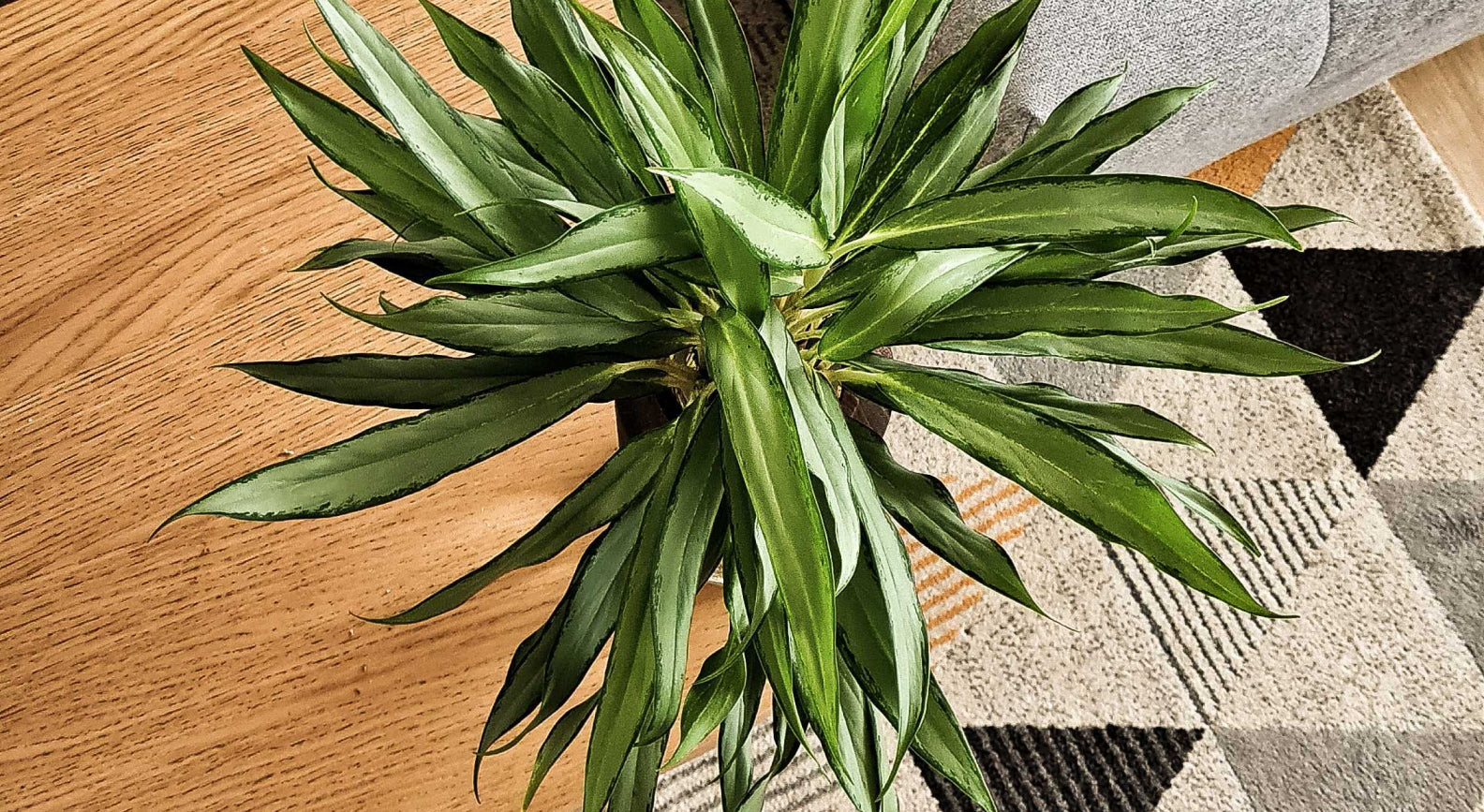
Photo: Aglaonema White Lance
What is the right potting mix for an Aglaonema?
A suitable potting mix for an Aglaonema should be free-draining and light, while still able to retain moisture. A mix of garden soil, peat and perlite or sand is recommended. The potting mix should be of good quality and rich in nutrients.
Perlite or sand is added to the potting mix to improve drainage and prevent excess moisture from building up. These materials help keep the roots of an Aglaonema well drained. You can also use an aroid potting mix.
You can choose Aglaonemas and other houseplants at our store in Prague 8.

Author: Martin Seidl